Thriving Canine offers a
Canine Good Citizen Course and/or
Private Lessons to help you prepare for the CGC Test. You may also opt for taking the test without taking any of our preparation options. Either way, below is a summary of the test items with the details provided in the AKC's
Participant and Evaluator Guide, as well as a few details specific to Thriving Canine's approach to the Canine Good Citizen (CGC) test items.
Item 1: Accepting a Friendly Stranger
This test demonstrates that the dog will allow a friendly stranger to approach it and speak to the handler in a natural, everyday situation. The Evaluator walks up to the dog and handler and greets the handler in a friendly manner, ignoring the dog. The test begins with the dog seated at the handler’s side. The Evaluator and handler do a pretend handshake (with hands about 12 inches apart) and exchange pleasantries (e.g., “Hello, it’s good to see you again,” as they pretend to shake hands). In this test, the Evaluator does not interact with the dog. - The dog must show no sign of resentment, aggression or shyness.
- The dog may not jump on or rush to the Evaluator to initiate contact. The dog may not lunge forward to greet the Evaluator.
- The dog should be under control throughout the exercise. If the handler must use excessive corrections (e.g., trying to hold the dog to prevent jumping) to control the dog, the dog should not pass the exercise.
Note: Thriving Canine does real handshakes, unless someone specifically requests a fake one. Item 2: Sitting Politely for Petting
This test demonstrates that the dog will allow a friendly stranger to touch it while it is out with its handler. With the dog sitting at the handler’s side, (either side is permissible) to begin the test, the Evaluator approaches and asks, “May I pet your dog?” The Evaluator then pets the dog on the head and body. The handler may talk to his or her dog throughout the exercise. After petting the dog, the Evaluator may circle the dog, or simply back away to begin the next test. - The dog must show no signs of shyness or resentment.
- As the Evaluator begins to pet the dog, the dog may stand to receive petting.
- The dog may not struggle and pull away to avoid petting.
- The dog may move slightly forward to receive petting but should not lunge at the Evaluator or rush or jump forward.
- The dog may appear to be happy about the contact with the Evaluator and may have some body movements.
- The dog should appear to be under control throughout the exercise.
Item 3: Appearance and Grooming
This practical test demonstrates that the dog will welcome being groomed and examined and will permit a stranger, such as a veterinarian, groomer, or friend of the owner, to do so. This test also demonstrates the owner’s care, concern, and sense of responsibility. The Evaluator inspects the dog to determine if it is clean and groomed. The dog must appear to be in healthy condition (i.e., proper weight, clean, healthy, and alert). The handler should supply the comb or brush commonly used on the dog. The Evaluator softly combs or brushes the dog and, in a natural manner, lightly examines the ears and gently picks up each front foot. - It is not necessary for the dog to hold a specific position during the examination, and the handler may talk to the dog, praise it and give encouragement throughout.
- The Evaluator may give the handler specific instructions for handling the dog in a manner that ensures safety. For example, when the feet are to be handled, the Evaluator may request that the handler lift each leg. The Evaluator may request that the handler steady the dog’s head for checking the ears.
- Another technique the Evaluator may use is to hold the dog’s head away with one hand and use the other hand to lift the foot.
- While the handler may be asked to steady the dog’s head, lift a leg, etc., any dog requiring restraining so it can be examined should not pass the test. The key question for this test is, “Could a veterinarian or groomer easily examine the dog?”
- Some dogs will wiggle or squirm when they are excited. Some squirming is acceptable, however, this should not be so excessive that the dog cannot be brushed.
- The dog should not struggle (pull away with intensity) to avoid the brushing.
Item 4: Out For A Walk (Walking on a Loose Leash)
This test demonstrates that the handler is in control of the dog. The dog may be on either side of the handler, whichever the handler prefers. (NOTE: The left side position is required in all AKC obedience competitions). The Evaluator may use a preplanned course or may direct the handler by calling out instructions (e.g., “right turn”). Whichever format is used, there must be a right turn, left turn, and about turn, with at least one stop in between and one at the end. The handler may talk to the dog throughout the “walk” to encourage it and may give praise. The handler may also give the dog a command to sit at the stop, if desired. - The dog’s position should leave no doubt that the dog is attentive to the handler and is responding to the handler’s movements and changes of direction.
- The dog need not be perfectly aligned with the handler and need not sit at the stops.
- The dog should not be constantly straining at the leash so that the leash is pulled tight. The Evaluator may instruct the handler to loosen (put more slack in) the leash. An occasional tight leash may be permitted.
- Excessive sniffing of the floor or ground, such that the dog will not walk along with the owner, should result in the dog not passing the test.
- If the dog is totally inattentive to the handler (e.g., does not change directions), it should not be passed.
Item 5: Walking Through a Crowd
This test demonstrates that the dog can move about politely in pedestrian traffic and is under control in public places. The dog and handler walk around and pass close to several (at least three) people. The Evaluator can be counted as one of the three people in the crowd. Children may act as members of the crowd, however, when children participate in the test, they must be instructed on their role and be supervised by an adult. Some of the members of the crowd may be standing still; however, some crowd members should be moving about. This test simulates settings such as busy sidewalks or walking through a crowd at a dog show or public event. If the CGC is being given for therapy dog certification (which is not an AKC activity), most national therapy dog groups require that at least one person in the crowd use some health-care equipment such as walkers, canes, wheelchairs, etc. There may be one dog in the crowd, but the dog must be on-leash, well mannered, and not attempt to initiate contact with dogs that are being tested. - In this test, the dog may show some interest in the strangers but should continue to walk with the handler, without evidence of over exuberance, shyness, or resentment.
- The dog may show mild interest in members of the crowd. The dog may sniff a person in the crowd briefly but must move on promptly.
- The dog may not jump on people in the crowd or attempt to go to them.
- The dog should not be straining at the leash.
- The dog should not be trying to hide behind the handler.
Item 6: Sit and Down on Cue/Staying in Place
This test demonstrates that the dog has training and will respond to the handler’s cues to sit and down and will remain in place as directed by the handler. The dog needs to 1) sit on cue, 2) and down on cue, 3) then, stay in a sit or down. For the Stay in Place test, the handler may choose to leave the dog in a sit or down position. So, it looks like this: “Show me your dog can sit on cue. Great! Now show me your dog will lie down on cue. Great! Now it’s time for the Stay—you choose the position, sit or down, leave your dog and walk out to the end of this line.” Prior to this test, the dog’s leash is removed and replaced with a 20-ft. line (or a 15-ft. line attached to the dog’s leash). The handler may take a reasonable amount of time and use more than one cue to make the dog sit and then down. The Evaluator must determine if the dog has responded to the handler’s cues. The handler may not use excessive force to put the dog into either position but may touch the dog to offer gentle guidance. When instructed by the Evaluator, the handler tells the dog to stay and walks to the end of the 20-ft. line, turns, and returns immediately to the dog at a normal pace, at which time the Evaluator instructs the handler to release the dog. The dog must remain in the place it was left (it may change position such as stand up) until the Evaluator instructs the handler to release the dog. The dog may be released from the front or side. - The 20-ft. line is used for safety. If the CGC test is indoors in a secure area, the Evaluator may choose to have the dog drag the leash or work off-lead in this exercise.
- There are no breed specific exceptions for sitting.
- Pulling the dog’s front legs out from a sit position (so that the dog automatically drops into a down) is beyond gentle guidance and the dog should not be passed. To prevent beginning handlers from tugging on the 20-ft. line as they leave the dog and pulling the dog out of the stay, Evaluators can do the following: 1) lay the 20 ft. line stretched out on the floor, 2) instruct the handler to attach the line to the dog’s collar, 3) after the handler attaches the line, give the handle end of the line to the handler and 4) instruct the handler to walk to the end of the 20-ft. line (holding on to the end).
- The dog is left for the stay in a sit or down. As the handler returns, if the dog simply stands but does not leave the place it was left, the dog passes the test.
- Dogs who do not sit or down after a reasonable period of time should not be passed.
- Handlers should not go to the end of the line and call the dog; they should return to the dog.
Item 7: Coming When Called
This test demonstrates that the dog will come when called by the handler. With the dog still on the 20-ft. line from Item 6, the handler will walk 10 feet from the dog, turn to face the dog, and will call the dog. The handler may use body language and encouragement when calling the dog. Handlers may tell the dog to “stay” or “wait” (or another similar command) or they may simply walk away. The dog may be left in the sit, down, or standing position. If a dog attempts to follow the handler, the Evaluator may distract the dog (e.g., petting) until the handler is 10 feet away. This exercise does not test “stay”; this exercise tests whether or not the dog will come when called. The test is complete when the dog comes to the handler and the handler attaches the dog’s own leash. - Dogs who attempt to follow the handler may pass the test. The Evaluator should distract the dog. The test begins when the handler calls the dog.
- The handler can bend down to call the dog, pat his or her legs, and make encouraging sounds.
- Handlers may call the dog more than once (two or three attempts) but if many, repeated prompts are required, the dog should not be passed.
- Dogs should not be passed if handlers have used the long line to “reel in” the dog. Dogs should come on their own when called. The Evaluator who sees that a handler is starting to reel the dog in may stop the exercise, give instructions to the handler, and start over.
Item 8: Reaction to Another Dog
This test demonstrates that the dog can behave politely around other dogs. Two handlers and their dogs approach each other from a distance of about 15 feet, stop, pretend to shake hands and exchange pleasantries, and continue on. The dog does not have to sit.- The dog should show no more than a casual interest in the distraction dog. If the dog attempts to go to or jump on the distraction dog, it should not pass the test.
- The dog may move slightly toward the other dog/handler, then stop. The dog must stay back from the other dog/handler.
- The dog can stretch its neck and sniff without moving forward to the other dog/handler.
- When the handlers stop to shake hands, the dog does not have to sit. It can remain standing beside the handler. If the dog remains standing, it should not cross over in front of the handler to go to the other dog.
- The conversation between the handlers can be brief, “Hi, good to see you again. Give me a call sometime.”
- As the handler leaves, if the dog turns around and begins pulling as if to follow the other dog/handler, the dog should not pass the test.
- If the distraction dog causes a disruption, the dog can be tested again with a more appropriate distraction dog. The distraction dog should have been observed or evaluated before the test to ensure that it is reliable.
Item 9: Reaction to Distractions
This test demonstrates that the dog is always confident when faced with common distracting situations. The Evaluator will select two distractions from among the following: (Since some dogs are sensitive to sound and others to visual distractions, it is preferable to choose one sound and one visual distraction.) - A person using crutches, a wheelchair, or a walker (5 ft. away).
- A sudden opening or closing of a door.
- Dropping a pan, folded chair, etc. no closer than 5 ft. from the dog.
- A jogger running in front of the dog.
- A person pushing a cart or crate dolly passing no closer than 5 ft. away.
- A person on a bike no closer than 10 ft. away. A note about distractions: Distractions such as gunshot, the rapid opening of an umbrella close to the dog, walking on a metal grid, etc. are temperament test items that are typically seen on formal temperament tests. The CGC Test should not be confused with temperament testing. While instructors may use a variety of distractions (e.g., a person in scuba gear) in training classes, in the CGC test, distractions should be items that are common occurrences in the community.
- The dog may show casual interest and may appear slightly startled. The dog may jump slightly but should not panic and pull at the leash to get away.
- The dog may attempt to walk forward slightly to investigate the distraction.
- Dogs who become so frightened that they urinate (or defecate) should not pass.
- Dogs who growl or lunge at the distraction should not pass.
- An isolated (one) bark is acceptable. Dogs who continue to bark at the distraction should not pass.
- Handlers may talk to dogs and give encouragement and praise throughout the test. Dogs may be given instructions by the handler (“Sit… good boy… watch me…”)
- Several national therapy dog groups use the CGC as a part of their therapy dog evaluations. These groups specify which distractions should be used. Evaluators who conduct the test for therapy dog groups will have this information.
- The distraction cannot simply be noise in the background (dogs barking, cars). Distraction stimuli should be consistent for each dog.
Item 10: Supervised Separation
This test demonstrates that a dog can be left in the presence of a trusted person and will maintain its training and good manners. Evaluators are encouraged to say something like, “Would you like for me to watch your dog?” An Evaluator will hold the leash of the dog while the owner goes out of sight for 3 minutes. In the early days of the CGC Program, evaluators were asked to not talk to the dog so that the testing of this skill could be standardized across evaluators. We realize that most owners would not leave their dogs with someone who did not talk to the dog. Evaluators may talk to and pet the dog but should refrain from giving the dog excessive attention, playing with the dog, etc. - The dog does not have to stay in position.
- If the dog continually barks, whines, or howls, it should not be passed.
- The dog should not pace unnecessarily, should not show signs of agitation.
- A dog that simply walks back and forth and looks for the handler is passed. There should be no signs of extreme stress, including panting, breathing hard, etc.
- If a dog begins to look very upset or distressed (barking, whining, panting, pacing, pulling), the test should be terminated. The CGC test is an activity that should be fun. We do not want dogs or handlers to have a bad experience with the CGC. If a dog is extremely distressed, training is needed. (This training should not be done during testing.) This one incident of giving in to the dog’s insecure behavior is not enough to cause any lasting effect. The owner should be told nicely that separation is an issue for the dog and that some training would help the dog feel more secure.
- If the Evaluator for Item 10 is sitting in a chair and a small dog tries to climb into the Evaluator’s lap, the Evaluator should stand up.
- If a dog pulls on its leash (trying to get away) it should not be passed.
- Any dog that urinates or defecates during testing should not be passed. The exception to this is in Test 10 when the test is outdoors, or between exercises (e.g., the dog urinates on a bush while being walked to the next test station). Dogs should not stop to relieve themselves while they are working with the handler in the exercises.
Setting Up Testing Stations in an Order that Keeps Things Moving Smoothly and Efficiently.
Here's an example of how we often order the test items:
- Out for a Walk (left, right, halt n sit, about turn, halt n sit, prepare for greeting)
- Accepting a Friendly Stranger
- Sit Politely for Petting (dog can break sit)
- Appearance & Grooming (brush, check ears, touch both front paws)
- Sit, Down and Stay (20 feet, from either position, can break position but not location)
- Come (10 feet, does not have to sit, put regular leash back on)
- Walking Through a Crowd (at least 3 people, can include 1 dog, mild interest or sniffing allowed)
- Reaction to Distraction
- Reaction to Another Dog (remains at handlers side, optional sit, mild interest ok)
- Supervised Separation (3 minutes, evaluator may talk to the dog but nothing excessive)
With a large group, we will have each handler/dog team take the above tests in small batches. For example: Each team takes tests 1-6, then each team take tests 7-8, then each team takes test 9 and then we end the testing period with each team doing test 10.
Retesting
Evaluators may choose to allow dogs who have only missed one test item to take the test again at the end of the day’s testing.Test Registration Forms
The Test Registration Forms for CGC are the forms that evaluators score at the test. Each test item is checked “pass” or “needs more training” and if the dog passes, this is the form the owner sends to AKC to request the certificate and/or title. CGC Test Registration forms should be entered online (in the secure portal) so the owner gets a message that the form was received, and it can be tracked. This method is faster than sending paper via the regular mail.Here is the link: https://www.apps.akc.org/title-application-portal/The Evaluator should keep the yellow copy of the 3-part form for one year. If an owner loses his or her paperwork and needs proof of passing the test, the Evaluator may be contacted. The dog owner receives 1) the original copy of the test form to send to AKC for the certificate, and 2) the back copy with test items for his or her records. If an owner waits longer than a year to send paperwork to AKC, the dog will need to be retested.Vaccines and Licenses
The CGC test does not require proof of vaccines. Owners sign the Responsible Dog Owner’s Pledge to attest that their dogs are in the care of a qualified veterinarian.I hope to see you and your dog at our next class and/or test. Good luck everyone!
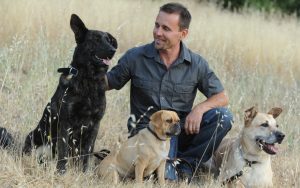
Chad Culp – Certified Dog Trainer, Canine Behavior Consultant, Owner of Thriving Canine.
© Thriving Canine 2025We offer
in-person training in the San Francisco Bay Area as well as
virtual consults anywhere in the world.
NewsletterYouTubeFacebookThriving Canine University private Facebook group. (please read the rules before joining)
Related Topics
Canine Good Citizen (CGC) Course Syllabus Therapy Dog Test Items